
Summary
In today's fast-paced business world, the exchange of data between different systems and organizations plays a pivotal role in ensuring smooth operations. One of the most widely used methods for transferring business data is Electronic Data Interchange (EDI). However, to ensure the reliability and accuracy of data being exchanged, it is crucial to validate it before it is processed. This is where the EDI Validator comes into play. An EDI Validator ensures that the data being exchanged follows the correct format and complies with industry standards. Let’s dive into how EDI Validators work and why they are essential in modern business operations.An EDI Validator is a software tool or system used to verify the accuracy, structure, and correctness of electronic data exchanges between business partners. EDI is used to automate the transfer of business documents such as invoices, purchase orders, and shipping notices. These documents must conform to specific standards and formats, and the EDI Validator ensures that the transmitted data adheres to these standards. Without an EDI Validator, businesses risk sending incorrect or improperly formatted data, which can lead to delays, disputes, or compliance issues. The validator works by checking the structure of the EDI documents and ensuring they meet the necessary formatting, syntax, and validation rules before they are transmitted or processed.
Why EDI Validation is Crucial for Business Operations
Inaccurate or non-compliant data exchanges can cause serious disruptions in business processes. These issues might range from delays in processing orders to problems with invoicing and inventory management. EDI Validators help mitigate these risks by ensuring that the data being sent or received meets the required specifications. This helps to:- Prevent Errors: By validating data, the software prevents errors that could lead to costly mistakes or delays in business processes.
- Ensure Compliance: Many industries have strict regulatory requirements for data exchanges, and EDI Validators help businesses comply with these standards.
- Enhance Communication: Properly validated data ensures clear and effective communication between business partners, preventing misunderstandings and fostering strong relationships.
Key Features of EDI Validators
1. Compliance with EDI Standards
EDI communication follows various standards, including EDIFACT, X12, TRADACOMS, and others. Each standard has specific formatting rules that must be adhered to for the data to be processed correctly. An EDI Validator ensures that the documents comply with the relevant standard, whether it is X12 for North American businesses or EDIFACT for European companies.EDI Validators can check the syntax of individual segments, elements, and qualifiers, ensuring that each part of the document is correctly formatted. They also validate the sequencing of segments and ensure that required segments are present. This level of validation helps businesses avoid costly errors and stay compliant with industry-specific standards.
2. Real-Time Validation
In many cases, EDI exchanges happen in real time, especially when dealing with order processing, inventory management, and invoicing. An EDI Validator supports real-time validation, meaning that as soon as data is received or transmitted, it is immediately checked for correctness. This reduces the need for manual intervention and allows businesses to address issues quickly.Real-time validation is particularly important in industries where time-sensitive transactions occur, such as manufacturing, retail, and logistics. By ensuring data accuracy at the moment of exchange, businesses can maintain a smooth, uninterrupted workflow.
3. Error Detection and Reporting
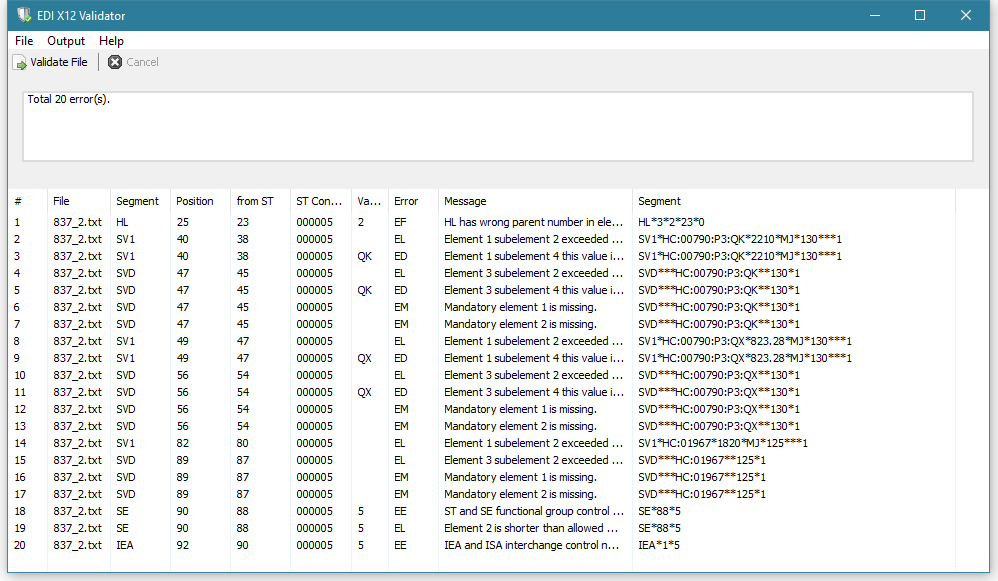
One of the most important functions of an EDI Validator is its ability to detect errors. These errors could be structural (e.g., incorrect segment formatting), semantic (e.g., incorrect values or missing information), or transactional (e.g., mismatch between purchase orders and invoices). The validator scans the data for inconsistencies and identifies any violations of the rules.Once an error is detected, the EDI Validator provides clear and detailed reports that explain the nature of the issue. These reports help businesses quickly resolve problems and prevent delays in processing. Instead of manually reviewing every transaction, the validator streamlines the error detection process and improves overall efficiency.
4. Customizable Validation Rules
Different businesses and industries have unique requirements for their EDI transactions. EDI Validators often come with customizable validation rules, allowing users to tailor the validation process to their specific needs. For example, a business might need to enforce additional checks or verify custom segments that are unique to their internal processes.By customizing the rules, businesses can ensure that the validator checks the data based on their specific requirements, ensuring that no important detail is overlooked.
Streamlining Data Integration
EDI Validators play a crucial role in streamlining the integration of data across various systems. Modern businesses often rely on multiple software systems, such as Enterprise Resource Planning (ERP) and Supply Chain Management (SCM) systems, which need to communicate seamlessly with each other. EDI Validators ensure that data being exchanged between these systems is correct and formatted according to the required standards.By validating the data before it enters the business system, the validator eliminates the risk of integration errors, which could otherwise lead to disruptions in the workflow. This allows for more efficient data processing and reduces the time spent on manual data entry or reconciliation.
Automating Data Entry and Processing
Automation is key to improving business operations, and EDI Validators play a vital role in enabling automation. By ensuring that the data being exchanged is accurate and properly formatted, businesses can automate the processing of invoices, purchase orders, shipment confirmations, and other documents. This reduces the need for manual intervention and improves overall operational efficiency.With automation, businesses can focus more on strategic tasks, such as analyzing data, negotiating with suppliers, or enhancing customer relationships, rather than spending time fixing errors or manually entering data into multiple systems.
Enhancing Partner Relationships
EDI is often used to communicate with business partners, such as suppliers, distributors, and customers. By ensuring that data is accurate and properly formatted, businesses can enhance their relationships with partners. Clear, accurate communication fosters trust and helps avoid misunderstandings or delays.For example, if a supplier receives an EDI document that is properly formatted and contains all the required information, they can process the order more quickly and efficiently. Similarly, a customer receiving an accurate invoice can make timely payments, improving cash flow and minimizing disputes.
Types of EDI Validators
1. On-Premises EDI Validators
On-premises EDI Validators are installed directly within a company’s IT infrastructure. These systems provide complete control over the validation process and allow businesses to customize the software according to their specific needs. On-premises validators are often used by large businesses with complex EDI requirements, as they offer more flexibility and security.However, they also come with higher upfront costs and require ongoing maintenance and management. Companies need dedicated IT resources to ensure the system is running smoothly and to manage any updates or modifications.
2. Cloud-Based EDI Validators
Cloud-based EDI Validators are hosted in the cloud and can be accessed over the internet. These validators are typically offered on a subscription basis, which makes them more affordable for small to medium-sized businesses. Cloud-based solutions are easy to set up, scale, and maintain, as the service provider manages the infrastructure.Cloud-based EDI Validators also offer the advantage of real-time data processing, as they can handle large volumes of data and provide instant error detection and reporting. They are particularly useful for businesses that need to process transactions across multiple locations or work with a range of external partners.
Improved Data Accuracy
The most significant benefit of using an EDI Validator is the improvement in data accuracy. By ensuring that data is correctly formatted and complies with all necessary standards, businesses can avoid costly errors and improve the reliability of their communications. Accurate data also reduces the risk of disputes and compliance issues, leading to smoother operations.Reduced Manual Work
EDI Validators automate much of the error detection process, reducing the need for manual intervention. This helps save time, improves productivity, and reduces the chances of human error. By automating the validation process, businesses can focus more on other strategic tasks and reduce the time spent on troubleshooting issues.Faster Processing Times
By ensuring that the data being exchanged is valid and error-free, EDI Validators help speed up the overall processing time. With accurate data, transactions can be processed more quickly, leading to faster response times, improved cash flow, and enhanced business efficiency.Final Thoughts
EDI Validators are essential tools for ensuring the smooth and efficient exchange of business data. By validating electronic documents for accuracy, format compliance, and adherence to industry standards, these tools help businesses improve data accuracy, streamline processes, and maintain strong partner relationships. Whether used on-premises or in the cloud, EDI Validators play a crucial role in reducing manual work, enhancing efficiency, and ensuring the integrity of business transactions.In a world where data exchange is critical to success, investing in an EDI Validator is a step towards more reliable, faster, and accurate business operations. By integrating these tools into your workflow, you can ensure that your business transactions remain smooth, accurate, and compliant.
Note: This price Is For Single PC License. If You Want To Buy KeyGen Then You Have To Go On Telegram ID @playoutking
Our Paid Service
If you want to Purchase KeyGen Activator / Cracked Version /License Key
Contact Us on our :
Join Us For Update :
Join Us For Updated :
Crack Software Policies & Rules:
You Can test through AnyDesk before Buying,
And When You Are Satisfied, Then Buy It.
Lifetime Activation, Unlimited PCs/Users.
If you want to Purchase KeyGen Activator / Cracked Version /License Key
Contact Us on our :
Join Us For Update :
Join Us For Updated :
Crack Software Policies & Rules:
You Can test through AnyDesk before Buying,
And When You Are Satisfied, Then Buy It.
Lifetime Activation, Unlimited PCs/Users.